
teleEEG Services2026-05-01T08:50:27-05:00

24/7 EEG Interpretation

Keep Patient Care Close to Home & Support Faster Clinical Decision-Making

Access TeleCare’s teleEEG program delivers reliable, high-quality EEG interpretation across inpatient and outpatient settings. Our neurologists provide comprehensive coverage for routine, STAT, and continuous studies, offering hospitals a scalable way to close coverage gaps, strengthen diagnostic accuracy, and support timely patient care.

Improvements Across Operations, Finance, Care Quality, and Outcomes with TeleEEG

Improve timely identification of seizure activity

Reduce unnecessary transfers

Support neurology workflows for local staffing

Increase patient & clinician satisfaction

TeleEEG Solutions Tailored to Your Facility’s Needs

Inpatient
EEG

  • Routine and STAT studies.
  • Spot and continuous EEG (long-term monitoring)

  • Coverage in ED, ICU, and Med/Surg
  • Pediatric EEG reads
  • Consultative support for EEG workflows and device selection

Outpatient
EEG

  • Routine spot EEGs
  • 48-hour turnaround for all outpatient studies

EMU
Support

  • Monitoring is available for spell capture, event characterization, and medication adjustments

  • Surgical-phase EMU evaluations (Phase I/II) are not included

Why hospitals choose Access TeleCare teleEEG services

TeleEEG Certainty When It Matters Most

“Timely EEG interpretation is often the difference between a stalled workup and a clear, actionable plan. When clinicians have dependable access to expert reads at any hour, LOS shortens, transfers decrease, and the care team can act decisively. That level of certainty is essential for both patient safety and operational efficiency.”

Annie Tsui, D.O.
Chief Medical Officer, Neurology
Access TeleCare

TeleNeurology Solutions
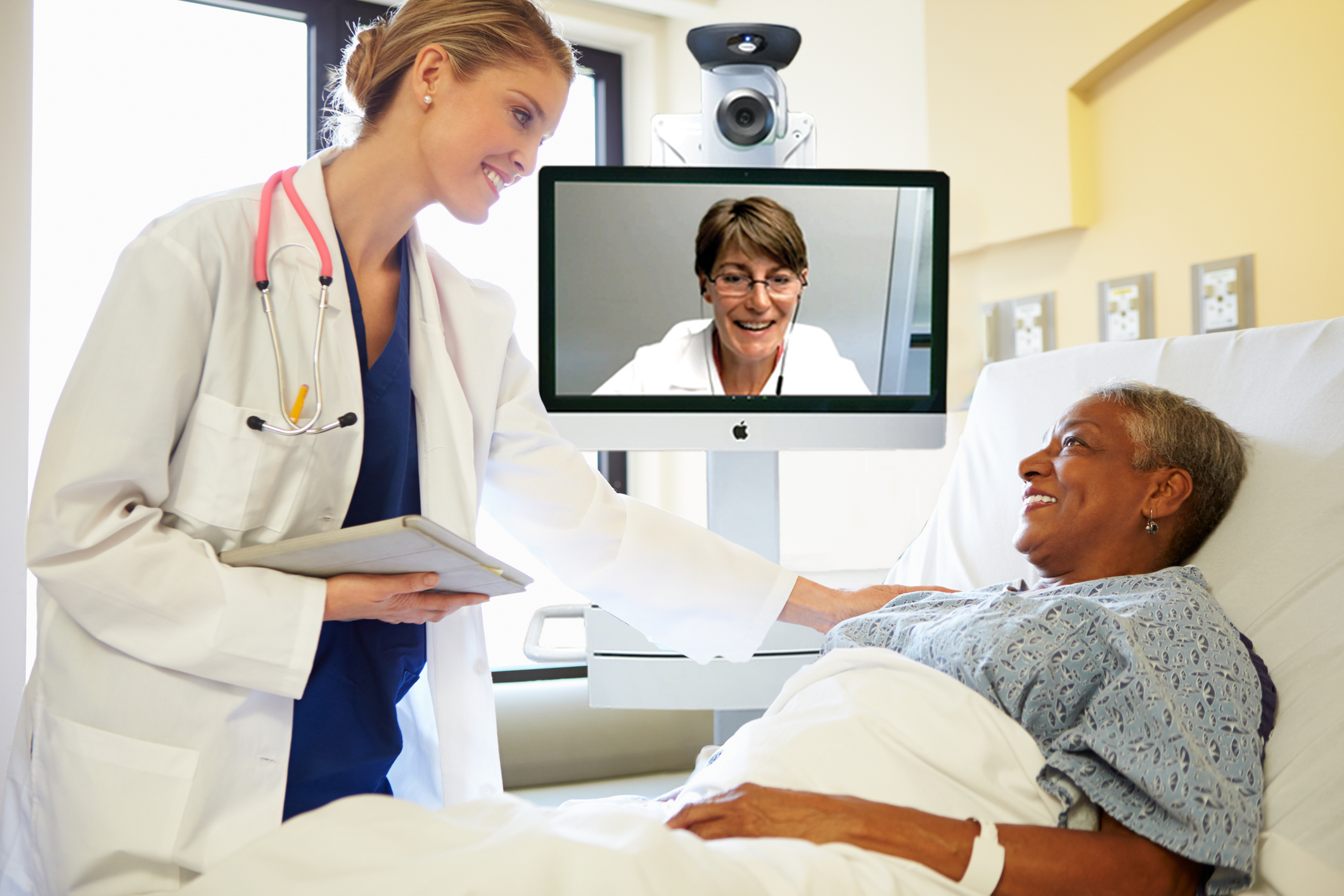
teleNeurologist on Access TeleCare cart and doctor talking to patient in hospital bed

TeleNeurology

Our experienced neurologists can provide coverage anywhere in the hospital, including teleStroke in emergency departments.

doctors looking at brain scan together

TeleStroke

TeleStroke care equips hospitals to care for patients experiencing strokes via telemedicine, including acute stroke care.

smiling nurse with happy elderly patient

TeleNeurohospitalist

TeleNeurohospitalists are fully integrated with on-site hospital staff to co-manage inpatient care for all neurology inpatients from admission through discharge.

Get Started with TeleEEG Services

TeleNeurology Articles

Hospital Week: Recognizing the Institutions That Hold Communities Together

Categories: Acute Care Telemedicine, Behavioral Health, Emergency Care, Events, General Telemedicine, News, Rural Health Care, teleCardiology, teleEEG, teleEndocrinology, teleHospitalists, teleICU, teleInfectious Disease, teleMaternal-Fetal Medicine, teleNephrology, teleNeurology, telePsychiatry, telePulmonology, teleStroke|

In many places, especially outside major metropolitan areas, hospitals are [...]

Nurses at the Center of Telemedicine Care

Categories: Acute Care Telemedicine, Behavioral Health, Emergency Care, Events, General Telemedicine, Infectious Disease, maternal-fetal medicine, News, Rural Health Care, teleCardiology, teleEEG, teleEndocrinology, teleHospitalists, teleICU, teleInfectious Disease, teleMaternal-Fetal Medicine, teleNephrology, teleNeurology, telePsychiatry, telePulmonology, teleStroke|

Recognizing National Nurses Week | May 6–12 Every year from [...]

Frequently Asked Questions

 
Which hospitals benefit most from teleStroke programs?2026-04-30T12:22:12-05:00

TeleStroke programs benefit a wide range of hospitals, especially those without 24/7 on-site neurology coverage. Rural and community hospitals, critical access hospitals, and facilities looking to expand or strengthen their stroke programs can use teleStroke to improve response times, reduce door-to-needle times, support stroke certification efforts, reduce transfers, and provide high-quality care close to home.

Does teleStroke improve patient outcomes?2026-04-30T12:21:46-05:00

TeleStroke improves patient outcomes by enabling faster diagnosis and treatment of stroke, which is critical for preserving brain function. Early intervention reduces the risk of long-term disability and increases the likelihood of recovery. It also helps standardize care, reduce treatment delays, and ensure patients receive the right level of care as quickly as possible.

What treatments can be guided through teleStroke?2026-04-30T12:21:24-05:00

TeleStroke neurologists guide hospitals through time-sensitive stroke treatments, including the administration of thrombolytic therapy (tPA) for eligible patients. They also support clinical decision-making around advanced interventions, imaging interpretation, patient triage, and whether a patient should remain at the facility or be transferred for higher-level care such as mechanical thrombectomy.

How quickly can a teleStroke consultation happen?2026-04-30T12:20:47-05:00

TeleStroke consultations are designed to occur within minutes of activation. Rapid response is critical in stroke care, where every minute impacts brain function and recovery. Access TeleCare’s teleStroke programs provide 24/7 availability, enabling hospitals to connect with a neurologist quickly and begin evaluation without delay.

What is teleStroke and how does it work?2026-04-30T12:20:21-05:00

TeleStroke is a telemedicine service that connects hospitals with board-certified neurologists for rapid stroke evaluation and treatment guidance. When a patient presents with stroke symptoms, a neurologist is engaged through a secure video connection to assess the patient in real time, review imaging, and collaborate with the bedside team. This allows hospitals to deliver expert stroke care quickly, even without an on-site neurologist.

Is teleEEG available 24/7?2026-04-30T12:19:48-05:00

Access TeleCare’s teleEEG services are available 24 hours a day, 7 days a week, 365 days a year. This ensures hospitals have continuous access to EEG interpretation for both routine and urgent cases, including nights, weekends, and holidays.

Does teleEEG reduce hospital transfers?2026-04-30T12:19:25-05:00

TeleEEG helps reduce unnecessary hospital transfers by providing rapid diagnostic clarity. When EEG results are delayed, hospitals often transfer patients to higher-level facilities as a precaution. With timely remote interpretation, clinicians can make informed decisions sooner, stabilize patients locally, and avoid transfers driven by uncertainty rather than clinical need.

How does teleEEG improve patient care?2026-04-30T12:19:05-05:00

teleEEG improves patient care by delivering faster access to EEG interpretation, which is critical for diagnosing and managing seizure-related conditions. Timely reads help clinicians confirm or rule out seizure activity, initiate treatment sooner, and avoid delays in care planning. This leads to more accurate diagnoses, shorter length of stay, improved patient safety, and the ability to keep patients closer to home when appropriate.

What types of EEG studies can be done remotely?2026-04-30T12:18:46-05:00

Access TeleCare’s teleEEG program supports a wide range of EEG studies across inpatient and outpatient settings. This includes routine and STAT EEGs, spot studies, and continuous EEG monitoring (long-term monitoring) for patients of all ages starting from Day 1 of life. EEGs can be performed in the ED, ICU, and Med/Surg units. Outpatient services include routine spot EEGs. The program also supports pediatric EEG interpretation and consultative guidance for EEG program development and device selection.

What is teleEEG and how does it work?2026-04-30T12:17:10-05:00

teleEEG is a remote EEG interpretation service that allows hospitals to access board-certified neurologists for timely analysis of brain activity studies. EEGs are performed on-site by hospital staff and securely transmitted to Access TeleCare neurologists, who interpret the results and document findings directly into the hospital’s workflow. This model provides continuous access to neurological expertise without requiring on-site coverage, supporting faster clinical decisions across inpatient settings.


Is teleNeurology accurate for diagnosis?2026-04-30T12:15:50-05:00

Yes, teleNeurology can support accurate neurological diagnosis when experienced neurologists are able to assess the patient over video, review imaging and lab data, and work closely with the bedside team. Access TeleCare specifically describes teleNeurology as an essential tool for getting the correct diagnosis in a range of neurological disorders and highlights teleEEG as a way to strengthen diagnostic accuracy and support faster decision-making. Its case examples also show teleNeurologists rapidly localizing stroke and guiding evidence-based treatment in real time. As with any clinical model, accuracy depends on the quality of the exam, available diagnostic data, and whether the patient needs an in-person procedure or hands-on follow-up.

What are the benefits of teleNeurology for hospitals?2026-04-30T12:15:27-05:00

For hospitals, teleNeurology improves access to specialist care, supports faster neurological evaluation, reduces unnecessary transfers, and helps keep more patients local. It can also strengthen quality metrics, expand treatment capacity, support stroke program goals, and improve staff confidence by giving bedside teams direct access to experienced neurologists. Access TeleCare cites results including reduced time to diagnosis, increased patient retention, improved clot-busting drug administration in stroke care (i.e. improved door-to-needle times), a 60% reduction in neurology transfers

When is teleNeurology used instead of in-person care?2026-04-30T12:15:02-05:00

TeleNeurology is often used when a hospital needs fast access to neurological expertise but does not have an on-site neurologist available, especially for stroke alerts, other neurological emergencies, inpatient neurology consults, after-hours coverage, and EEG interpretation. It is especially valuable for community and rural hospitals that need to evaluate and manage patients quickly without waiting for an in-person specialist. TeleNeurology can help many patients receive care locally, but some cases still require in-person procedures or transfer, such as when a patient is being considered for endovascular treatment or another intervention that cannot be performed virtually. Other facilities that have on-site neurologists (often more urban in location) can still leverage teleNeurology to help cover additional volume or to keep consistent care over nights and weekends, when on-site resources may not be available.

How does a teleNeurology consultation work?2026-04-30T12:13:59-05:00

A teleNeurology consultation typically begins when a hospital activates a stroke alert or requests a neurology consult. An Access TeleCare teleNeurologist is notified immediately, joins the bedside team by secure high-definition video, and reviews the patient’s symptoms, exam findings, imaging, lab results, and available chart information in real time. Bedside nurses or clinicians assist with the physical assessment while the neurologist directs key parts of the evaluation, such as NIHSS scoring for stroke, and recommends next steps, which may include medication, monitoring, admission, follow-up care, or transfer for a higher-level procedure when needed.

What is teleNeurology and what conditions does it treat?2026-04-30T12:13:32-05:00

teleNeurology is virtual neurology care that connects hospitals and patients with board-certified neurologists for real-time evaluation, diagnosis, treatment guidance, and inpatient co-management. Access TeleCare’s teleNeurology programs support emergent neurology and stroke care in the emergency department, neurohospitalist care from admission through discharge, and teleEEG services for faster interpretation. Conditions commonly treated include stroke, epilepsy and seizures, severe migraine, movement disorders such as Parkinson’s, neuropathy, myelopathy, neuromuscular disorders, and other acute or complex neurological conditions.

Contact Us to Learn More

Go to Top