
Video: Strategies for Overcoming Healthcare Challenges with Telemedicine Experts
For more than two decades, Access TeleCare has operated at the forefront of virtual care delivery, advancing telemedicine as a sustainable, strategic solution for the challenges modern health care providers face. Our telemedicine programs have yielded significant results for our hospital partners and a wealth of insights into the future of health care delivery.
Webinar Key Points
Acute Telemedicine is the Answer to Hospital Financial & Staffing Challenges
Acute Telemedicine is the Answer to Hospital Financial & Staffing Challenges
Telemedicine addresses physician burnout, workforce shortages, specialist availability, access to care, and timeliness of care challenges.
Hospital-based Telemedicine Works for Both Rural & Urban Communities
Hospital-based Telemedicine Works for Both Rural & Urban Communities
Telemedicine can transform care for both rural and urban communities. The webinar focused on our neurology and behavioral health programs.Telemedicine is a Game-Changer for Acute Behavioral Health Care
Telemedicine is a Game-Changer for Acute Behavioral Health Care
ED boarding and wait times were reduced while also improving the patient experience and patient health outcomes.Neurology revenue increased 300% upon adding teleNeurology services
Neurology revenue increased 300% upon adding teleNeurology services
Timely acute stroke care, fast EEG readings, and high-quality teleNeurohospitalist services provided better care and reduced transfers, enabling patients to stay local and get care quickly.
See our Telemedicine Programs in Action
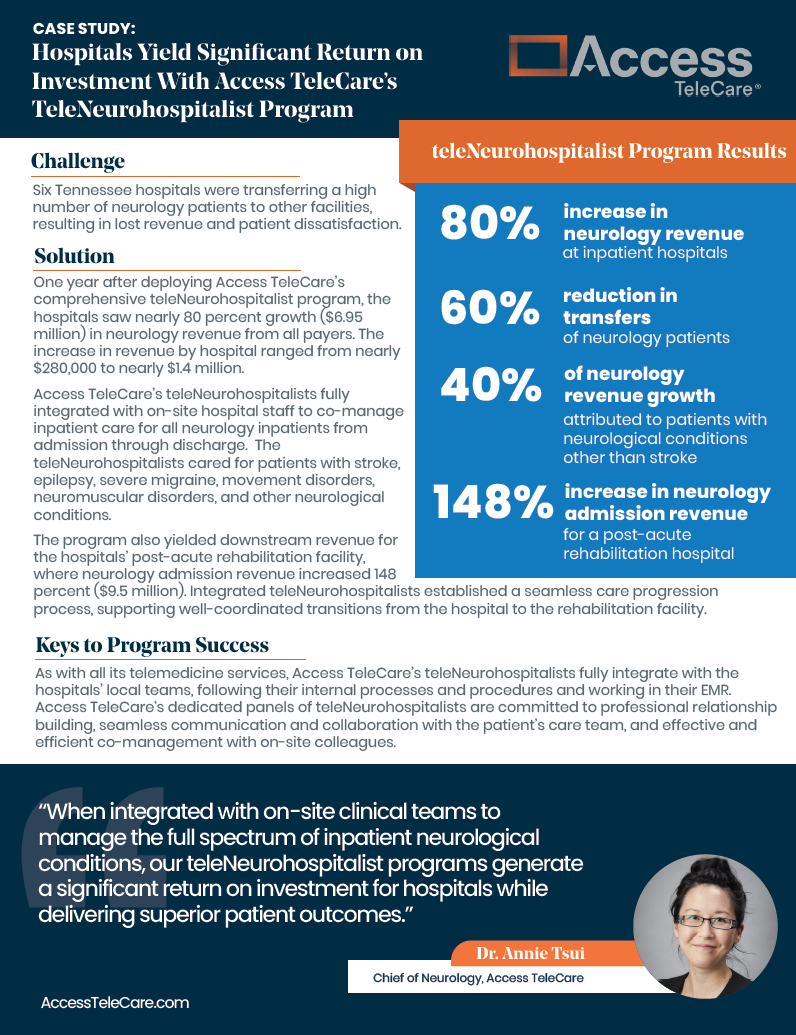
Hospitals Yield Significant ROI with Access TeleCare’s TeleNeurohospitalist Program
Access TeleCare’s teleNeurohospitalists fully integrated with on-site hospital staff to co-manage inpatient care for all neurology inpatients from admission through discharge. The teleNeurohospitalists cared for patients with stroke, epilepsy, severe migraine, movement disorders, neuromuscular disorders, and other neurological conditions.
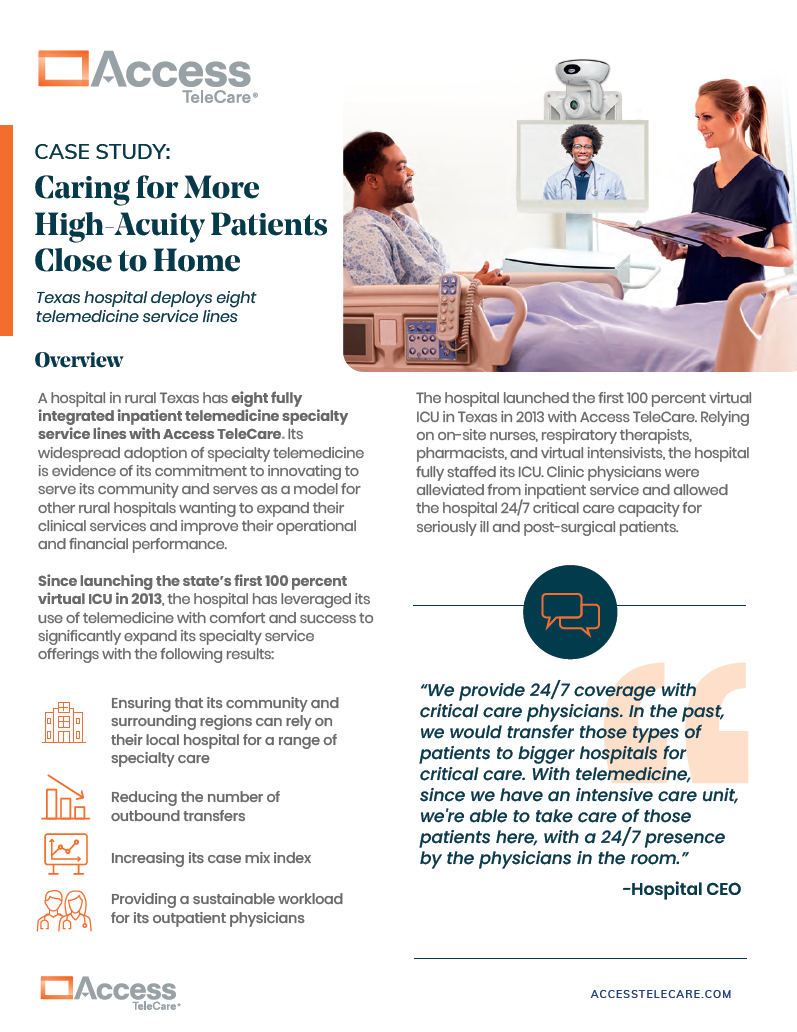
Caring for More High-Acuity Patients Close to Home
When rural hospitals implement telemedicine, they typically have one, possibly two, service lines. This hospital in rural Texas has eight. Since launching an Access TeleCare teleICU and telePulmonary/Critical Care program in 2013, the hospital continued to expand its telemedicine services.
See more insights from Access TeleCare

When Maternity Care Is Miles Away: Telemedicine’s Role in Supporting Rural Communities
By Blake Porter, M.D., Chief of Maternal-Fetal Medicine & Chief Medical Officer of Specialty Services [...]
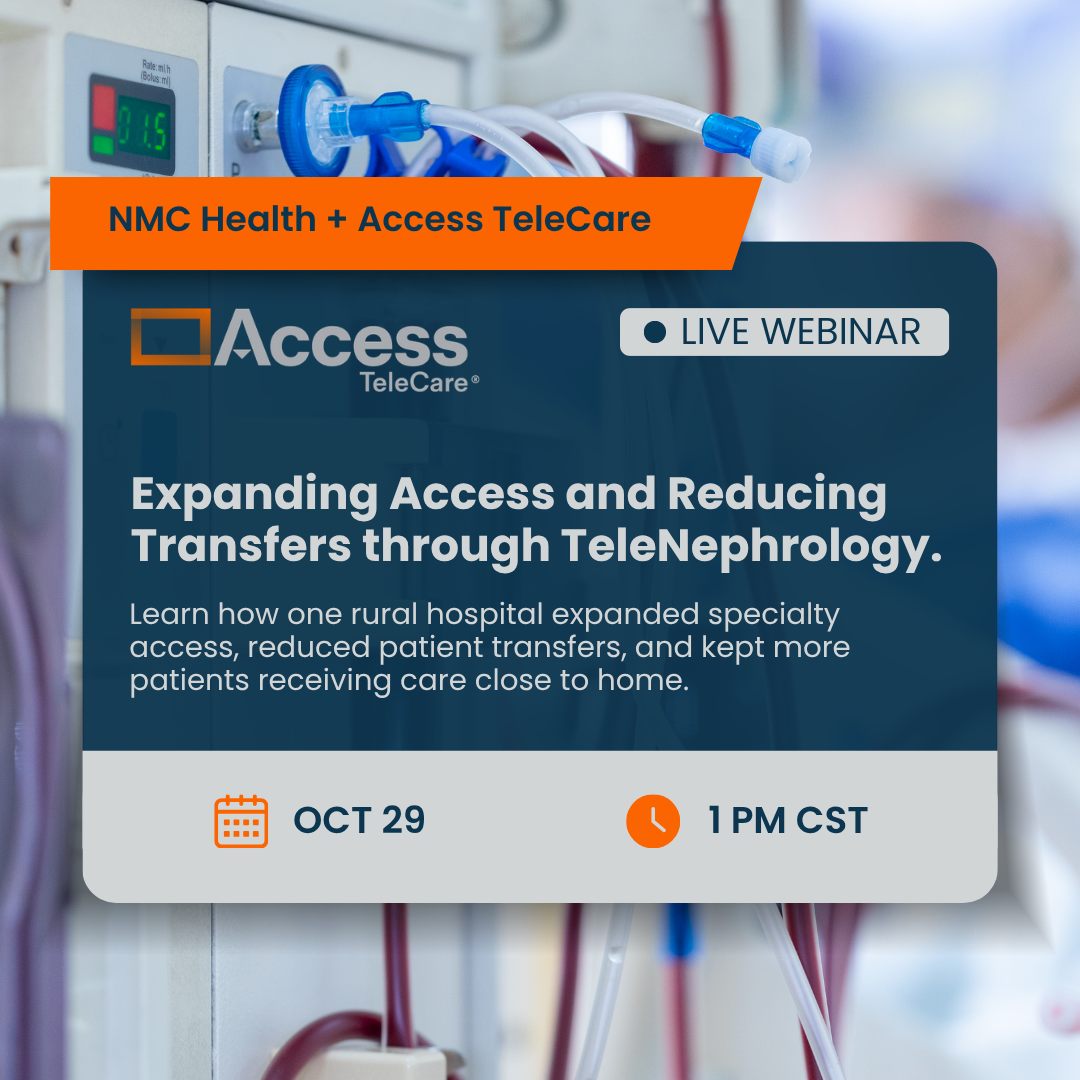
Live Webinar: Expanding Access and Reducing Transfers through TeleNephrology with NMC Health
How did one rural hospital expand access to nephrology services while reducing patient transfers [...]

Raising the Standard for Quality in Telemedicine
As telemedicine becomes an increasingly important part of how hospitals deliver specialty care, quality cannot [...]

Access TeleCare Named to TIME’s World’s Top HealthTech Companies 2026
Access TeleCare has been named to TIME’s World’s Top HealthTech Companies 2026, joining a selective [...]

On-Demand Webinar: Keeping Patients Local: What the New AHA/ASA Stroke Guidelines Mean for Your Program
The 2026 American Heart Association/American Stroke Association stroke guidelines are changing how hospitals [...]
Beyond the Screen: How Physician Assistants Extend the Reach of Specialty Care
By Lauren Ingram, MSN, MS, APRN, FNP-C, Chief of Advanced Practice Clinicians, Access TeleCare Every [...]